Gambling Commission Executive Director Tim Miller Charts Course for Regulated Innovation and Enforcement at BGC AGM 2026
Written by Yara Zimmermann · Mar 14, 2026

Gambling Commission Executive Director Tim Miller Charts Course for Regulated Innovation and Enforcement at BGC AGM 2026
Keynote Delivery Amid Evolving Landscape
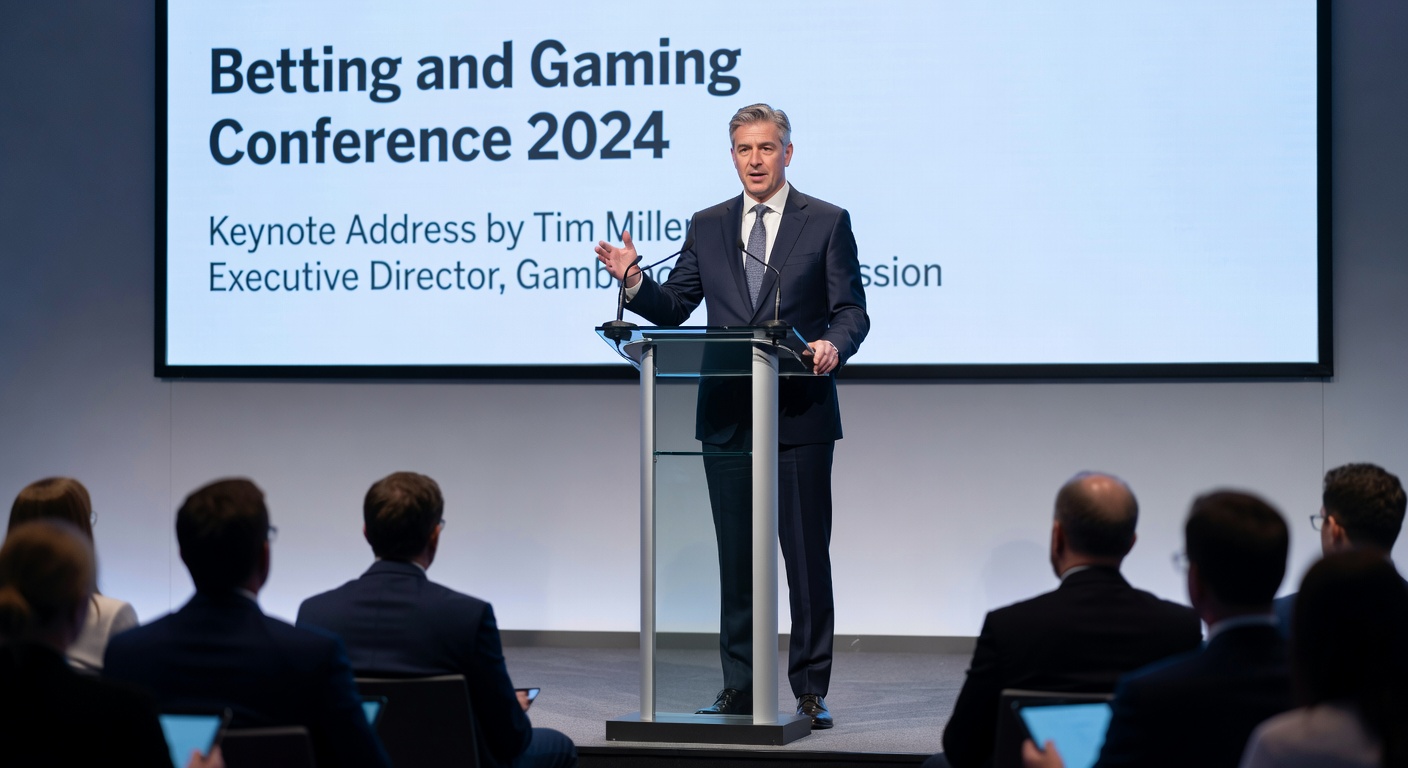
Tim Miller, executive director of the UK Gambling Commission, took the stage at the Betting and Gaming Council (BGC) Annual General Meeting on 26 February 2026, laying out a clear vision for the sector's regulatory future; attendees heard updates on leadership transitions, fresh funding injections, proposed fee hikes, and a push for licensed market innovation, all while the calendar flips toward March 2026 with these developments still fresh in discussions across Westminster and Whitehall.
What's interesting here—and what operators and stakeholders are parsing closely—is how Miller balanced enforcement muscle against support for business growth, emphasizing that the licensed market thrives when regulators back smart, low-risk advancements rather than stifling them.
The speech landed at a pivotal moment, just weeks before Chief Executive Andrew Rhodes steps down on 30 April 2026, signaling continuity even as personnel shift; Miller didn't dwell on the departure but framed it within broader commitments to robust oversight.
Leadership Transition Signals Steady Hand at the Helm
Andrew Rhodes, who has steered the Gambling Commission through turbulent times including post-pandemic recoveries and affordability check rollouts, wraps up his tenure on 30 April 2026; those who've followed the Commission's trajectory note that such changes often test institutional memory, yet Miller's address projected seamless handover, with no immediate gaps flagged in regulatory delivery.
Turns out, the real focus stayed on forward momentum—Rhodes' exit coincides with ramped-up initiatives against illicit operators, underscoring that leadership evolves but priorities endure.
Observers point out how this timing aligns with March 2026 consultations heating up, where industry voices weigh in on fees and funding, keeping the BGC AGM speech as a benchmark for what's ahead.
£26 Million Boost Targets Illegal Gambling Underground
A headline-grabber from Miller's remarks: the Commission secures £26 million over three years, earmarked specifically to dismantle the illegal gambling market that siphons revenue and exposes consumers to unchecked risks; this funding, drawn from government coffers, equips enforcement teams with resources for investigations, prosecutions, and tech-driven monitoring, addressing operators who dodge licensing by lurking offshore or in grey zones.
But here's the thing—it's not just about throwing money at problems; data from prior crackdowns shows illegal sites often mimic legitimate ones, preying on lapsed punters, so the cash fuels taskforces blending Commission expertise with industry intel and Home Office muscle.
Collaboration emerges as the linchpin, with Miller spotlighting joint efforts already yielding results, like site blocks and operator shutdowns; as March 2026 unfolds, expect this pot to translate into visible actions, from fintech tracing to international partnerships.
Licence Fee Consultation: From 0.21% to 0.28% of GGY
Miller flagged an upcoming consultation on hiking licence fees from the current 0.21% to 0.28% of Gross Gambling Yield (GGY), a move designed to underwrite the Commission's expanded remit without leaning solely on taxpayer funds; figures reveal this adjustment tracks rising compliance demands, from anti-money laundering checks to safer gambling tools rolled out in recent years.
Stakeholders listening at the BGC AGM know the drill—GGY, that core metric of operator profits after payouts, forms the fee base, so a 0.07% bump ripples through balance sheets, particularly for high-volume remote sectors; yet Miller positioned it as fair value, tying revenues directly to the protections they enable.
And while some operators crunch the numbers in March 2026 boardrooms, the consultation invites input, promising data-driven tweaks based on feedback from BGC members and beyond.
Innovation Gets the Green Light: Sports Books in Casinos as Prime Example
Support for licensed innovation stood out sharply, with Miller championing physical sports books nestled inside casinos as fully aligned with licensing goals and carrying no elevated risk profile; take Paddy’s Sports Book at London’s Hippodrome Casino, where punters blend table games with in-play betting terminals—a setup regulators now view as enhancing rather than undermining venue safety.
It's noteworthy that such hybrids, blending retail betting with casino floors, emerged from operator pitches vetted under existing rules; researchers who've analyzed footfall data find these integrations boost dwell time without spiking problem gambling signals, validating Miller's stance.
So, operators eyeing expansions—whether hybrid wagering hubs or tech-infused lounges—get reassurance: propose boldly, provided risks stay contained; this nod to creativity contrasts with the sledgehammer on illegals, showing regulators distinguish helpers from hindrances.
People who've studied market evolutions often discover that venues like the Hippodrome lead by example, drawing crowds who stick to licensed rails while illegal alternatives fade; Miller's examples underscore how innovation fortifies the regulated ecosystem, deterring drifts to the black market.
Taskforce Collaborations Ramp Up the Pressure on Illicit Operators
Collaboration wove through the speech like a recurring theme, with Miller detailing taskforces uniting the Commission, industry players, and government arms to squeeze illegal operators from all angles; these groups share threat intel, harmonize block lists, and coordinate stings, turning fragmented efforts into a unified front.
What's significant is the momentum building into March 2026, where early wins from these alliances—like shuttered domains and frozen assets—build cases for more funding; BGC attendees left buzzing about pooled resources, knowing their compliance data feeds directly into enforcement wins.
Yet challenges persist—illegal markets adapt fast, using crypto and mirrors—but taskforce agility, bolstered by that £26 million, positions the licensed side to outpace them.
Broader Implications for Operators and Consumers
For operators navigating this roadmap, the speech distills to action items: brace for fee consultations, lean into taskforce intel-sharing, and innovate within bounds, as exemplified by Hippodrome-style setups; consumers, meanwhile, benefit from fortified barriers against rogue sites, with funding channeling toward consumer protection tech.
One case researchers highlight involves prior taskforce interventions that redirected thousands from illicit platforms back to licensed ones, preserving GGY integrity; Miller's vision, delivered amid February's AGM glow, carries into spring deliberations, where every stakeholder has skin in the game.
Now, as March 2026 consultations kick off in earnest, the ball's squarely in industry's court to engage, shape fees, and amplify anti-illegal drives.
Wrapping Up the Regulatory Playbook
Tim Miller's BGC AGM address on 26 February 2026 encapsulated a multifaceted strategy—Rhodes' 30 April exit notwithstanding, the Commission doubles down on £26 million enforcement funding, floats a 0.21% to 0.28% GGY fee rise via consultation, endorses low-risk innovations like Paddy’s Sports Book at the Hippodrome, and fortifies taskforces against the illegal underbelly; these threads, woven tightly, aim to nurture a vibrant licensed market while starving its shadows.
Stakeholders parsing the details in the weeks since find a blueprint that's pragmatic, resourced, and inclusive; with March 2026 marking the pivot to implementation, the sector watches how words turn to deeds, ensuring regulation evolves alongside the games people play.